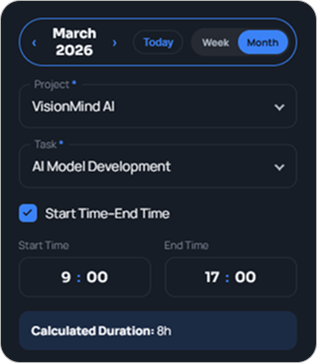
Plan Projects. Allocate Teams. Track Efforts.
PROJECT ESSENTIAL
It is the project operations platform for service companies. It brings project planning, team allocation, time capture, and performance tracking together, so you always know who is working on what, how much time it is taking, and whether that matches what you planned.
Know where every hour goes.
The plan and reality live in different places.
The Business Challenge
Projects start with a plan: timelines, effort estimates, staffing needs. Then work begins, and the plan stops getting checked.
Why task-level planning matters
Most overruns don't happen evenly across a project. One or two tasks quietly run long while the rest stays on track. Project-level tracking alone won't catch that in time.
What typically happens
Hours get submitted somewhere and filed away. They are never checked against the plan they were meant to feed.
Who's working on what sits in a shared calendar or a manager's memory, not in a system anyone can query.
The estimate is set at kickoff and then abandoned. Reality drifts, but the number on paper stays frozen.
There is no clear view of whether project effort is tracking within the planned budget.
Nobody can say if a project is on budget until it's over. By then, the money is already spent.
Solution
Project Essential
It's operational foundation of a connected platform
It connects planning, staffing, and time capture, so the plan is something you can measure against, not just a document you wrote once.
Plan Projects
Plan Team
Capture Time
Measure Performance
Who can use?
Project Essential is built for organizations where people, projects, and time are the core of how value gets delivered:
- IT service companies
- Consulting firms
- Digital agencies
- Engineering services companies
- Architecture and design teams
- Law firms
- Healthcare providers
If your business needs to know which people are working on which projects, whether that matches the plan, and how much time is actually being spent, this is what Project Essential is built to answer.






CAPABILITIES
Everything you need for Project Delivery
Project Planning
Set realistic timelines and effort estimates before work begins
- Plan at the Project and Task level:
- Planned project duration and efforts
- Planned effort and schedule per task
- Client-facing or internal project
- Time & Material, Fixed Price, or Non-Billable
Why task-level planning matters
Most overruns don't happen evenly across a project. One or two tasks quietly run long while the rest stays on track. Project-level tracking alone won't catch that in time.
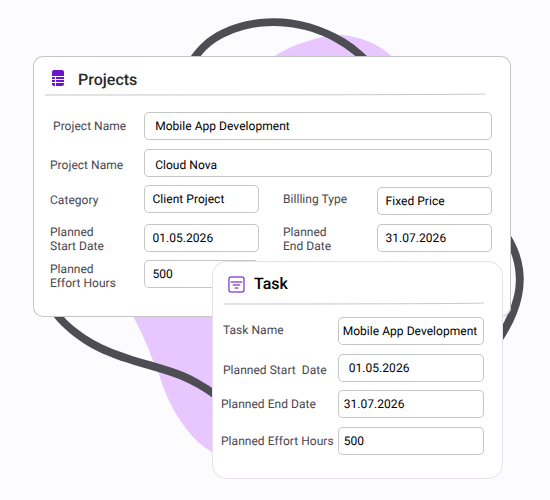
Plan projects with realistic timelines and effort estimates, so there's something concrete to measure against once work begins.
Staff Planning
Know who is working on what, and stop time being logged where it shouldn’t
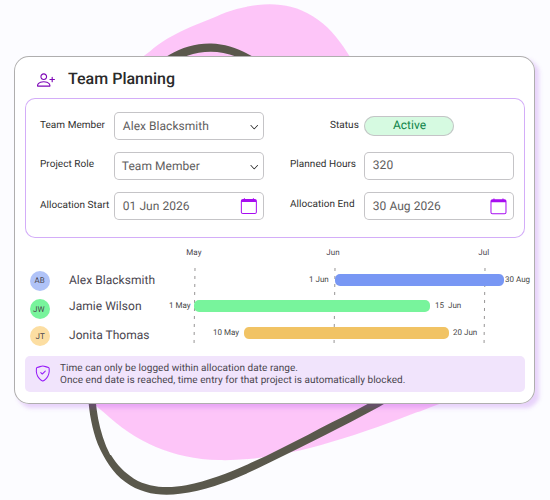
Before anyone logs an hour, you need to know who is actually meant to be on the project. Most service companies skip this step, and it’s where billing problems start.
Allocate team members with defined allocation start date, end date and right Project-level role (Project Manager or Team Member).
The operational control that matters
Team members cannot submit time against a project outside their allocation period. If an allocation ends on the 15th, hours can't be logged against that project on the 20th.
Business outcome
Ensure the right people are available at the right time, while preventing incorrect project charging before it happens.
Time Capture
Give your team a simple way to log time without turning it into a chore
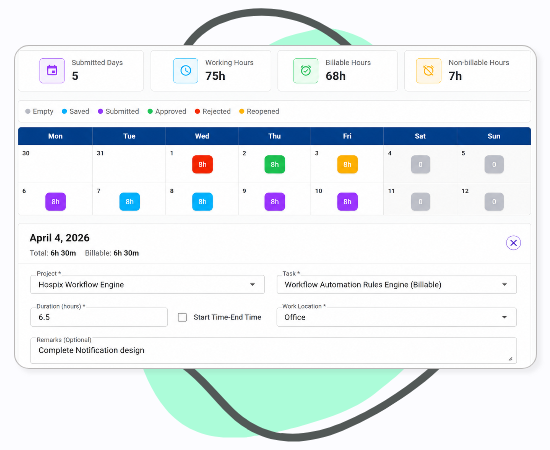
- Time entry options:
- Decimal hours, for quick entry
- Start and end time, when precision matters
- Weekly and monthly timesheet view
- What gets captured:
- Time against specific tasks
- Billable and non-billable effort
- Time across multiple projects, for team members working on more than one
Why it matters:
A rigid, one-size-fits-all timesheet is the fastest way to get late or inaccurate entries. When logging time takes ten seconds instead of ten minutes, people actually do it on time, which means the data your reports and billing depend on is reliable from day one.
Business outcome
Capture accurate project effort every day, without adding administrative overhead your team resists.
Timesheet Governance
Time capture only has value if there is a clear process around what happens to that data afterward.
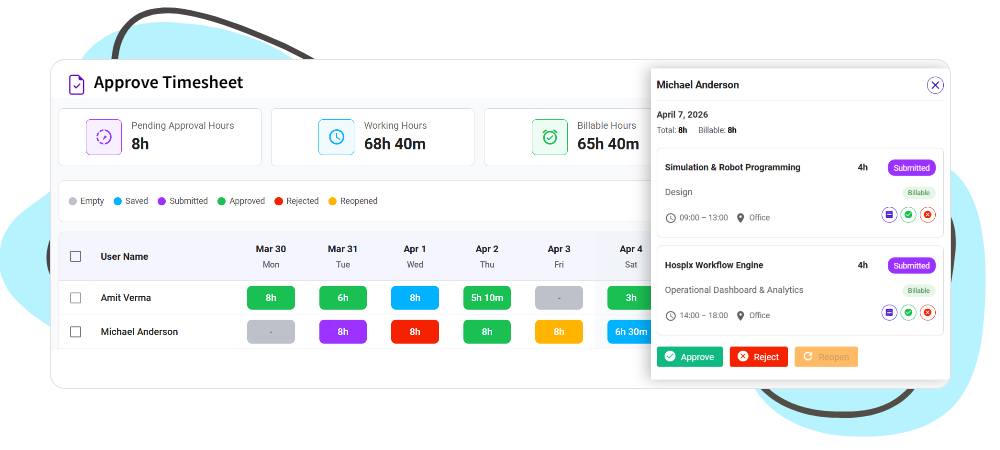
Team members can:
Project managers can:
Compliance
Timesheets that are not submitted within a defined window get locked automatically, so follow-up happens before missing data becomes a bigger problem.
Activity log
Every meaningful action on a timesheet, including when it was created, updated, submitted, and approved, is recorded and retained.
Why it matters
Not bureaucracy for its own sake. It's about knowing the numbers a project manager or finance team works from actually reflect what happened, and can be traced back if a client, auditor, or your own team asks a question later.
Business outcome
Standardize how project effort is reviewed, approved, corrected, and audited across the organization.
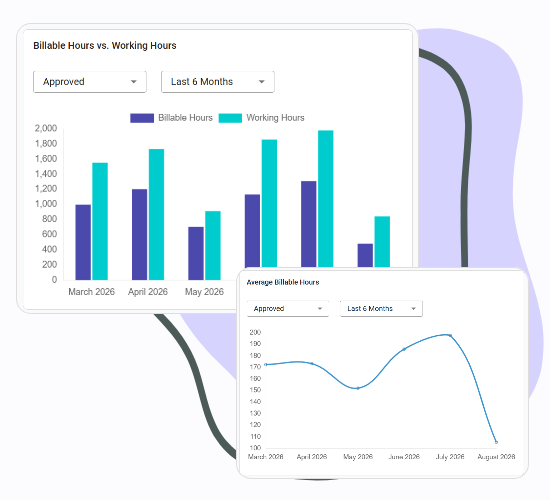
Performance Measurement
See planned vs. actual, and who’s doing what, from one dashboard
- Planning only pays off if you check it against reality, and reality only makes sense with the right view for the right person.
- Track what matters:
- Planned vs. actual effort, by project, task, or team member
- Billable vs. non-billable, client vs. internal
- Company, project, and individual dashboards
- Reports filterable by client, project, team member, time period, or approval status
Why timing matters
A task running over budget mid-project is a course correction. The same overrun found after the project closes is a post-mortem. Catching the gap early is the whole point.
Business Outcome
Spot projects that need attention while there's still time to act, and give every level of the business the view of effort it actually needs.
Application Security
Control who sees what, down to the project level
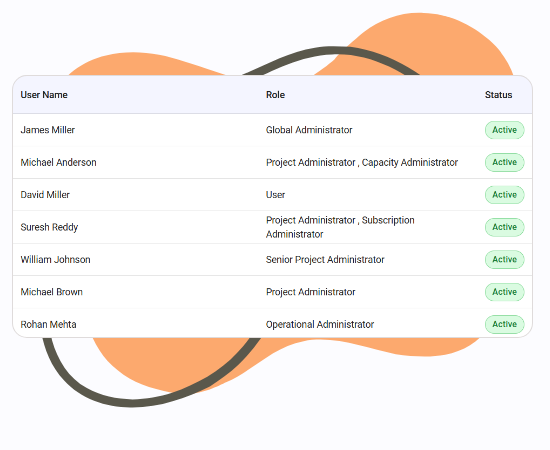
- Project managers, client managers, and finance all need different things from the system. None of them need access to everyone else's data to do their job.
- Application roles: control what a person manages across the app (Global Administrator, Project Administrator, Client Administrator, User, and others)
- Project roles: control what a person can do within a specific project (Project Manager, Team Member)
- Project visibility: Open, Protected, or Confidential
Why it matters
The same person can lead one project and contribute to another, with access that fits each role, not a blanket "sees everything" or "sees almost nothing."
Business outcome
Give people exactly the access their work requires, while keeping sensitive project and client data restricted to the people who should see it.
Built for every Team involved in Delivery
Project Essential is used differently depending on where you sit in the organization.
Everyone works from the same underlying data. Nobody is reconciling their version of the numbers against someone else’s.
- Project Managers
- PMO & Operations
- HR & Capacity Teams
- Finance Teams
- Leadership
- Employees






Frequently Asked Questions
Project Essential is used to plan projects, allocate team members, capture time against projects and tasks, manage timesheet approvals, and compare planned effort against actual effort. It gives service companies one connected view of how work is being delivered.
No. Timesheets are one part of it. Project Essential also handles project planning with effort estimates, team allocation with defined dates, planned vs. actual performance tracking, and role-based access across projects.
It is closer to a project operations platform than a standalone timesheet tool.
Users submit timesheets for review. Approvers can approve, reject or request changes. Approved timesheets may be reopened only by the Timesheet Approver role to allow corrections.
A timesheet lock prevents edits after a configured deadline. Global administrators set lock policies to enforce submission cut-offs and protect billing integrity.
No. Time entry is tiedto allocation periods. A team member can only submit time against a project during thedates they are actually allocated to it, which prevents incorrect project charging.
Yes. It tracks planned vs. actual effort at both the project and task level, along with billable vs. non-billable time and client vs. internal time, so you can catch overruns while a project is still in progress.
Through two layers of access.
Application roles control what a person can manage across the platform, such as creating projects or managing subscriptions. Project roles control what a person can do within aspecific project, such as Project Manager or Team Member. Projects can also be marked Open, Protected, or Confidential to control visibility across the organization.
Yes. Project Essential is the operational foundation of the SaralFlow platform. LeaveHub manages absence and availability, and Project Finance uses the approved time and effort data from Project Essential to handle billing rates, project costing, and financial reporting.
Service-based organizations where projects, people, and time are central to how they deliver value: IT services, consulting firms, digital agencies, engineering services, architecture and design teams, and managed service providers.
- Project Essential
Build Your Operational Foundation
Plan your projects. Allocate your team. Capture every hour. Know where you stand against the plan, while there is still time to act on it.